The question at a mamak table that started BlackRevo
BlackRevo began in 2025, after badminton, at a mamak table, with one question: why are we still doing things the usual way? Here is what the question meant, what it cost us to answer, and how I still ask it every week as General Manager.
Also available in 中文
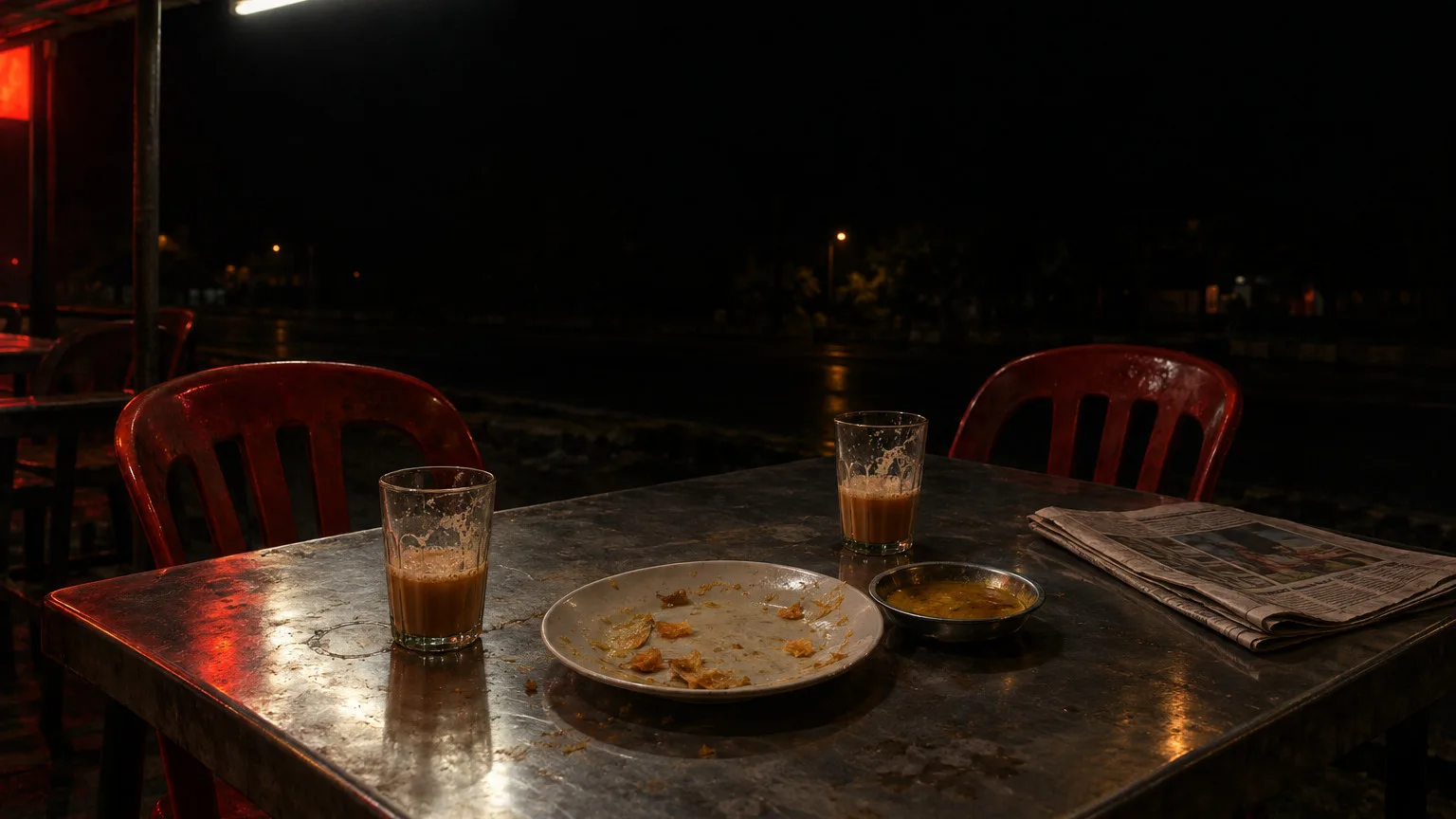
One question, late at night
If you are Malaysian you already know the setting. A mamak is where things get said that do not get said in an office: open late, cheap, loud, a glass of teh tarik in front of everyone, nobody in a hurry to leave. Half the plans in this country are made at one.
Ours was made in 2025, after badminton. We were tired, still in our sports clothes, and someone asked a question that was not clever at all: why are we still doing things the usual way?
It landed because everyone at the table had a version of it. Curiosity about what was possible. Frustration with how work actually got done where we worked. And, underneath, the wish to build something bigger than the next job. All of that came out that night, and none of us went home the same.
What "the usual way" meant
For the businesses around us, the usual way was a website that existed because a business is supposed to have one, that ranked for nothing and was measured by nothing. Marketing was bought on visibility, on how much of it you got, rather than on whether a single customer arrived. Nobody was asking what a visit was worth.
Inside the companies we knew, the usual way was work that lived in people's heads and in files passed by hand. If you wanted to know how something was done, you asked the person who did it last time, and hoped they were in.
So the question had two halves. Could a business be found by the people who were already looking for it, and then turn that visit into revenue? And could a company be run so that the way things are done is written down, simple, and repeatable, instead of carried around by whoever happened to be there?
What started small became a mission: help businesses transform digitally, leave a larger digital footprint, and build something meaningful and enjoyable on the way.
The name
We joined two words. Black and Revolution.
Black is the unknown, the disorder, the hidden opportunity. That is where the work begins: shining a light, giving direction, and building digital systems that are simple to run. Without black, there is no light to see.
The company does two things, and only two. Search engine optimisation that puts a business in front of high-intent searches, the people already typing what it sells. And web development that turns those visits into enquiries and revenue. Strategy, technology and data-driven execution, measured by results rather than visibility alone. That last clause is the mamak question, written into the business.
What the mistakes taught us
We made the mistakes a young company makes, and we made them fast, because the company is barely a year old. The ones that cost the most were about people.
They taught us two things that now run the place. The first is to value talent above almost everything else. An agency has no factory and no product on a shelf. It has people who know how to do the work and people who are learning to. Everything we sell is made by them, so the house has to be built for them.
The second is that growth takes courage. It means doing what you have not done, what you feared, and what you were reluctant to do. Every time the company grew, it was because someone at the table did one of those three things.
Three values, from that table
Out of the question and the mistakes came three values, written in 2025, our first year. They were not on a poster. They were how a decision got made when I was not in the room.
Trustworthy. Keep our word, earn trust. A client believes a promise once. After that they believe the record.
Simple and direct. Clarity over complexity. If a plan needs a long explanation, it is not finished. If a report hides the number, it is not honest.
Growth and breakthrough. Do what you have not done, what you feared, and what you were reluctant to do. This one is for us before it is for clients.
In 2026 we rewrote them. Growth and breakthrough stayed, with a third line added: transformation, do what you were reluctant to do. Trustworthy became Keep your word, in three parts we can actually check: do what you said, own what you do, follow through. Simple and direct gave way to something a first-year company needed more: Dare to think, dare to play. Why a company barely a year old rewrote its values, and what changed in the room when it did, is the next post.
The question, still asked
My job today is the daily engine of the company: the people, the process, and the hundred small decisions that keep client work moving. The engineering background matters here, because an agency is a system of handoffs, and most of my job is making those handoffs honest and repeatable.
That is the mamak question at a smaller scale. When a handoff lives in a Word document and an Excel sheet, the usual way wins by default, because nobody chose it. So we built Lumen, the internal system every BlackRevo employee runs on. It replaced the Word documents and Excel sheets that used to hold how the company works. Employees use it to understand the company, apply for leave and submit claims. HR runs the complete hiring flow inside it, from the job posting to the offer. Each department is getting its own module for its projects, with the analysis built in.
None of that is a product for sale. It is the same question, asked inside the walls: why are we still doing this the usual way?
How to ask it in your own company
I call this the usual-way walk. It takes an afternoon and it works for any firm small enough that you can still name every handoff.
- List the handoffs. Every point where work leaves one person and reaches another: a brief, an approval, a leave request, a claim, a client report. Write them down in the order the work flows, not the org chart.
- For each one, ask three things. Who touches it, in what tool, and why that tool. The answer you are looking for is "because we always have". That is the usual way, and it is never a reason.
- Pick one and replace it with the smallest thing that removes the chore. Not a platform. One form that files itself, one page that answers the question people keep asking. Internal tools earn trust one saved hour at a time.
- Give each person what they need to succeed. Fairness is not treating everyone the same. The new hire needs the written version; the senior person needs the exception handled. Build for both, then walk again next quarter.
The question that started the company is not special. Anyone can ask it. What made it a company is that we kept asking it after the teh tarik was finished.
FAQ
What is a mamak?
A Malaysian open-air eatery, usually run by Indian Muslim families, open late or all night, serving teh tarik, roti canai and rice dishes at plastic tables. It is the country's default meeting place, for football, politics and business plans alike.
What does BlackRevo do?
Two things: search engine optimisation that puts a business in front of high-intent searches, and web development that turns those visits into enquiries and revenue. It is based in Kota Damansara, Selangor, and measured by results rather than visibility alone.
Did you have a business plan that night?
No. There was a question and the wish to build something bigger. What started small became a mission, and the plan was written by the mistakes along the way.
What is the "usual-way walk"?
An afternoon's exercise for a small company: list every handoff, ask who touches it, in what tool and why, and replace the one held together by habit with the smallest thing that removes the chore. Repeat every quarter.